
Paradise Valley buyers have, for the most part, already been through a renovation or two. They’ve seen the word “custom” printed on every proposal from every cabinet company in the Valley, and started to notice the finished kitchens don’t always look as different from each other as the word suggested they would.
What “Custom” Actually Means, Even at the High End
Here’s what most buyers don’t realize until they’ve been through the process once: nearly every kitchen, including the finest ones, starts from a standard cabinet. That’s not a shortcut — it’s good engineering, and it frees the design conversation to focus on layout, proportion, and finish instead of reinventing basic geometry each time.
The real question isn’t whether a kitchen starts from a standard cabinet — almost all of them do. It’s how much range that starting point gives you: how many lines it’s drawn from, how far it can be modified, and what happens on the rare wall where even heavily modified standard isn’t enough.
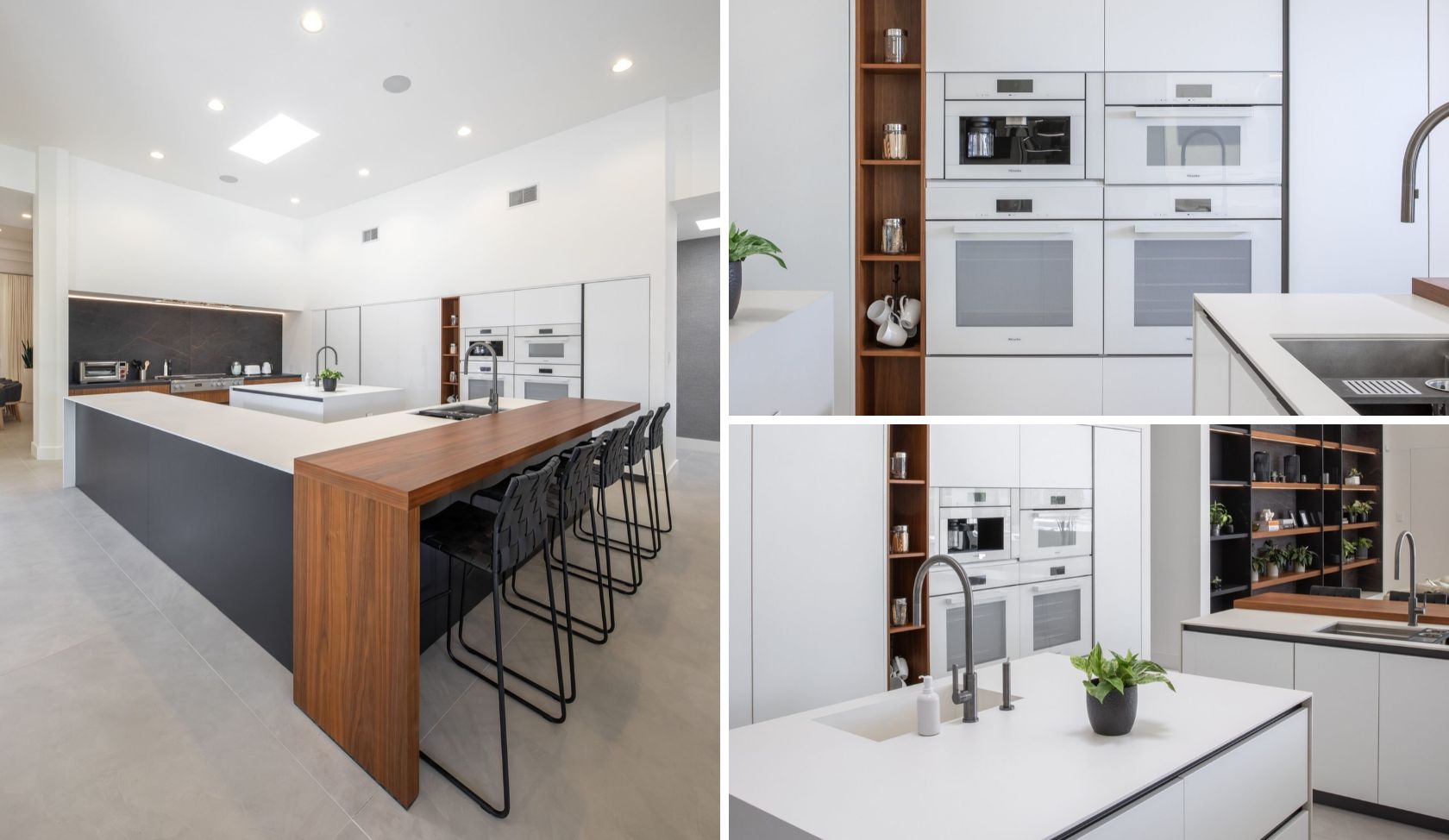
Breadth and Modification Do Most of the Work
A brand working from a single catalog eventually runs into the same handful of compromises, no matter how skilled the team is, because every solution is built from the same limited set of boxes. We work from dozens of engineered lines and product collections, each with its own geometry, module types, and finish systems — which means a given layout or corner condition usually has more than one starting point before modification even begins.
Modification is where most of the actual design happens: dimensions adjusted to the real space, module configurations built around how the kitchen will be used, finishes and hardware combined in ways the catalog alone wouldn’t suggest. For most homes, that’s enough to reach a design that feels genuinely specific to the house.
And When Standard Isn’t Enough — Full Custom
Every so often, a layout or design idea goes past what any standard line, however modified, can deliver. That’s when we build a fully custom cabinet from the ground up. It’s not our starting point for most projects — it’s the option that stays available so a design idea never has to shrink to fit a catalog limitation.
“Having that many lines to draw from, and the ability to modify almost anything inside them, covers the overwhelming majority of what a client wants. But knowing we can build something from scratch when a design genuinely calls for it means we’re never the reason an idea doesn’t happen.” — Bobby
The Difference Ownership Makes
Range aside, there’s one more distinction worth knowing: who’s responsible after the check clears. A dealer network model means the person who sold you the kitchen may not be the one handling a warranty issue two years later. An owner-operated boutique doesn’t have that seam — the person you met in the showroom is still accountable for the install and everything after.
If you’d like to see that range in person, our Scottsdale showroom is a fifteen-minute drive from most of Paradise Valley. We’re happy to walk you through what’s possible, no obligation attached.